The decision arrived from your Managing Partner in March. 14 portfolio companies, one summit, two days in October. So what if you’ve never done it before? Figure it out.
Before the venue, before the agenda, one question decides whether it works: who pays, and how do you split the bill?
Portfolio company conference planning is a cost-allocation problem wearing an event's clothing. Get the split wrong and every chief executive in your portfolio spends two days resentful at you instead of talking to each other.
Get it right and you've built the one thing a standalone company can never buy: 13 peers who take your call during an after-hours crisis.
Below, we’ll cover: three ways to split the bill and the fourth to avoid, what your two days are for, an agenda by hour, where the experience curdles, and the buying power almost nobody claims.
Who pays, and the three ways to split it
Decide the money first. Put it in writing. Then don't touch it again once your invitations have gone out, because you won't get a second chance.
Imagine a portfolio summit where the firm charged every company the same fee per attendee. Fair enough, right?
By the second morning it wasn't.
The two largest businesses were paying the same per head as a company a tenth their size. The small ones had sent one person each while the big ones sent six. The little firms that needed the summit’s lessons were getting crowded out by the firms that were already succeeding. A suboptimal experience.
So here's the rule we took out of it: a cost split at a portfolio event is a message about status, no matter what your finance team intended when it built the budget, because a chief executive who thinks she's paying for the privilege of sitting with people below her will be polite, present, and totally disengaged.
Price out all 3 options below:
- The firm pays all of it. $300,000 from the management company, nothing from the portfolio. It says this is our event, your time is the contribution. Best when attendance is expected rather than optional, and best when you want the smallest companies fully represented. This is typically the best option if your management fee can support it or if you can find sponsors.
- A share by revenue or by enterprise value. An hour of finance work. If your largest company is 30% of portfolio revenue it owes $90,000. The smallest, at 2%, owes $6,000. Fair the way a tax is fair, and right for a wide portfolio where the range between companies is enormous. This is more possible in private equity where you can include the price in the annual management fee you sweep from the portco’s cash balance.
- A flat fee per company. $300,000 across 14 is roughly $21,400 each. Every business sends whoever it wants. Best when the summit is genuinely optional, because a company that opts out pays nothing and nobody has to argue about it.
- What we'd avoid: a flat fee per attendee. At 120 guests that's $2,500 a head. The company that would have sent 6 people now pays $15,000 to do it. The one you most want on the network sends a single person to save $10,000, then flies home having met basically no one.
Whichever you pick, write one paragraph explaining why. We ask for it before the invitation goes out rather than after, because this is what it has to say:
The firm is covering the full cost of the October summit. No portfolio company will be invoiced for anything beyond its own team's travel to and from the venue. We picked this over a per-company or per-attendee split for one reason: we want the smallest businesses in the room with as many people as the largest ones send. Attendance is mandatory for the chief executive plus two.
Why bother with a paragraph? Because a cost structure nobody has explained gets explained by your portcos to each other instead, usually over dinner on the first night, usually wrongly.
What the event is for
Why are you gathering 14 management teams in one place?
There are three good answers, but you should pick just one:
- Transfer something specific. One company has solved a problem the other 13 have. Pricing, a hiring model, a supplier relationship, a system that works.
- Build the network. A chief executive with a problem at 9pm should have 13 phone numbers instead of one. Across a 5-year hold period that pays massive dividends.
- Set an expectation. The firm has a view about the next 18 months. It lands better IRL than in a board deck.
Two answers is a compromise and three is a conference nobody remembers. If you can't name your one answer in a sentence, don't book a venue.
Does your summit pay back? The hold period says yes. The median holding period for private-equity-backed portfolio companies has reached 5.8 years, the longest since tracking began, in data covering 2000 through 2025.
You've got longer with these teams than a firm did a decade ago, which changes the ROI of a summit completely.
The agenda that earns a chief executive's time
Every chief executive you invite is giving up two days. What convinces them? An agenda they'd have come to anyway.
Day one.
- 12:00pm. Arrivals and lunch, seated, mixed by company. No welcome speech.
- 2:00 to 3:30. Three companies each present one problem. 15 minutes to describe it, 30 for the room to attack it. Status updates are banned.
- 3:45 to 5:15. Functional groups. Every finance leader in one room, every people leader in another, every revenue leader in a third. They each get one question to discuss and then round robin about this quarter’s projects and blockers.
- 7:00pm. Dinner, seated, mixed, no program.
Day two.
- 9:00 to 10:30. The firm's view of the next 18 months, including the two bets it's probably wrong about, said out loud.
- 10:45 to 12:15. Peer pairs. Each chief executive spends 45 minutes with a peer on a problem submitted in advance, then swaps.
- 1:15 to 2:45. The shared-buying session. Insurance, software, freight, travel, recruiting. What can 14 companies buy together?
- 3:00 to 4:00. Every attendee names one thing they'll do in 60 days, with a date.
- 4:00pm. Ends. People fly home the same evening.
Here are the questions we'd send your functional groups 3 weeks ahead, one per group:
- Finance leaders: which number does our board ask about that you still can't answer within a day?
- People leaders: what is the one role you've failed to fill twice, and who in this room has already filled it?
- Revenue leaders: when did your win rate move last year, and what did you change to move it?
You'll notice what's missing: there's no keynote.
At a portfolio summit a hired speaker says that nobody in your own portfolio had enough to say, which the chief executives in the room will clock before the first coffee break.
The method underneath all of this, working backward from a single goal to the agenda and only then to dates and venue, is written up in Affinity Travel Co's offsite planning framework.
Where a portfolio summit curdles
These go wrong in three ways. We've watched all three.
The first is the reporting exercise. 14 company updates in a row, and by the ninth one nobody is listening. Ban the update: every slot on your agenda holds a problem somebody is stuck on.
Then there's your own firm talking too much. Count it: if your partners hold the microphone for more than a quarter of your working hours, you've built a LP meeting for the wrong audience.
The one that costs most is silence afterward. Momentum from a two day program has a half-life measured in days and weeks, so book the 30 day check-in before anybody leaves the room. Don't wait on the rest: send the commitment list, with names and dates, inside 48 hours.
Is that a soft measure? No. Gallup puts the gap between its most and least engaged teams at 23% in profitability and 43% in turnover. Manager engagement itself fell from 27% to 22% between 2024 and 2025. The managers running your 14 companies carry that too.
Read our longer treatment of all 3 failures in why corporate offsites fail.
What 120 guests from 14 companies takes to run
A portfolio summit is harder to run than one company's event, for a dull reason: 14 sets of assistants.
120 guests from your 14 companies means 14 sign-off chains, 14 travel policies, and 14 people who each assume somebody else is collecting the food allergies. Air alone is 120 bookings across 40 or so home airports, where every change moves a ground transfer with it.
Then it's 7am on day two. Three flights are delayed, one chief executive has moved to an earlier departure without telling anybody, and the room for your functional groups got hot-swapped. All three have to be fixed in 90 minutes.
So who is standing in the hallway at 7:15? If that person works for your firm, they'll spend the morning on the phone to an airline instead of cultivating relationships across the portfolio.
Here's the calendar we'd hand you, counting back from day one:
- 6 months out. Dates locked with 14 assistants. Hardest step in the program, and the one that slips.
- 5 months out. Venue contracted. One property that holds all 120, with a general session room plus 3 breakouts at once.
- 4 months out. The money memo goes out with the save-the-date: which split, why, what each company owes, when it's invoiced.
- 3 months out. Problems collected. Each company submits the one problem it will bring to the room.
- 8 weeks out. Air opens. 120 individual itineraries, one place tracking them.
- 3 weeks out. Functional group questions written and sent. Pre-work assigned so sessions start at a decision.
- 1 week out. Rooming list, food allergies, and the arrival and departure manifest locked. Your ground transport is built from that manifest.
- The night before. We staff the property that evening, walking the rooms.
- Day 60. The check. Same list, same names, same dates.
The power to buy in bulk
Here's the part your firm can claim. Your 14 companies each run their own offsites, sales kickoffs, and client events. So they're buying from the same suppliers at 14 different prices, on 14 sets of terms, agreed by 14 people who've never once compared notes.
Where do you start? We'd start with travel and meetings: the numbers are visible and the contracts renew every year.
Insurance, software and logistics are where we'd go next.
Your summit is the natural place to open the subject, since everybody is in one room and somebody can just ask who buys what from whom.
The savings are worth chasing now. In the American Express Global Business Travel 2026 forecast, 71% of meeting professionals expect cost per attendee to rise, with cost the top planning challenge at 38%, drawn from 601 professionals in eight countries. Hotel average daily rate rose 2.2% year over year in early 2026 while occupancy barely shifted. Budgets are tight everywhere too: two-thirds of event teams face flat or falling budgets, with nearly 70% cutting how many programs they run, across more than 400 event decision-makers.
One agreement across 14 companies is something your firm can hold, which is the whole argument for running the sourcing from the top rather than asking 14 chief executives to each go and negotiate their own version of the same contract with the same supplier in the same week.
Handing the whole program to one partner
Affinity Travel Co. is a single partner that plans and executes corporate offsites, executive retreats, sales kickoffs, conferences, and incentive travel for groups of 10 to 500, booking and managing every vendor from venue and air to private dining and ground transport, with staff on site for the program.
That's what we mean by fully delegated. In 2026, we've run 30+ programs across 28 countries, including 9 Michelin-starred meals.
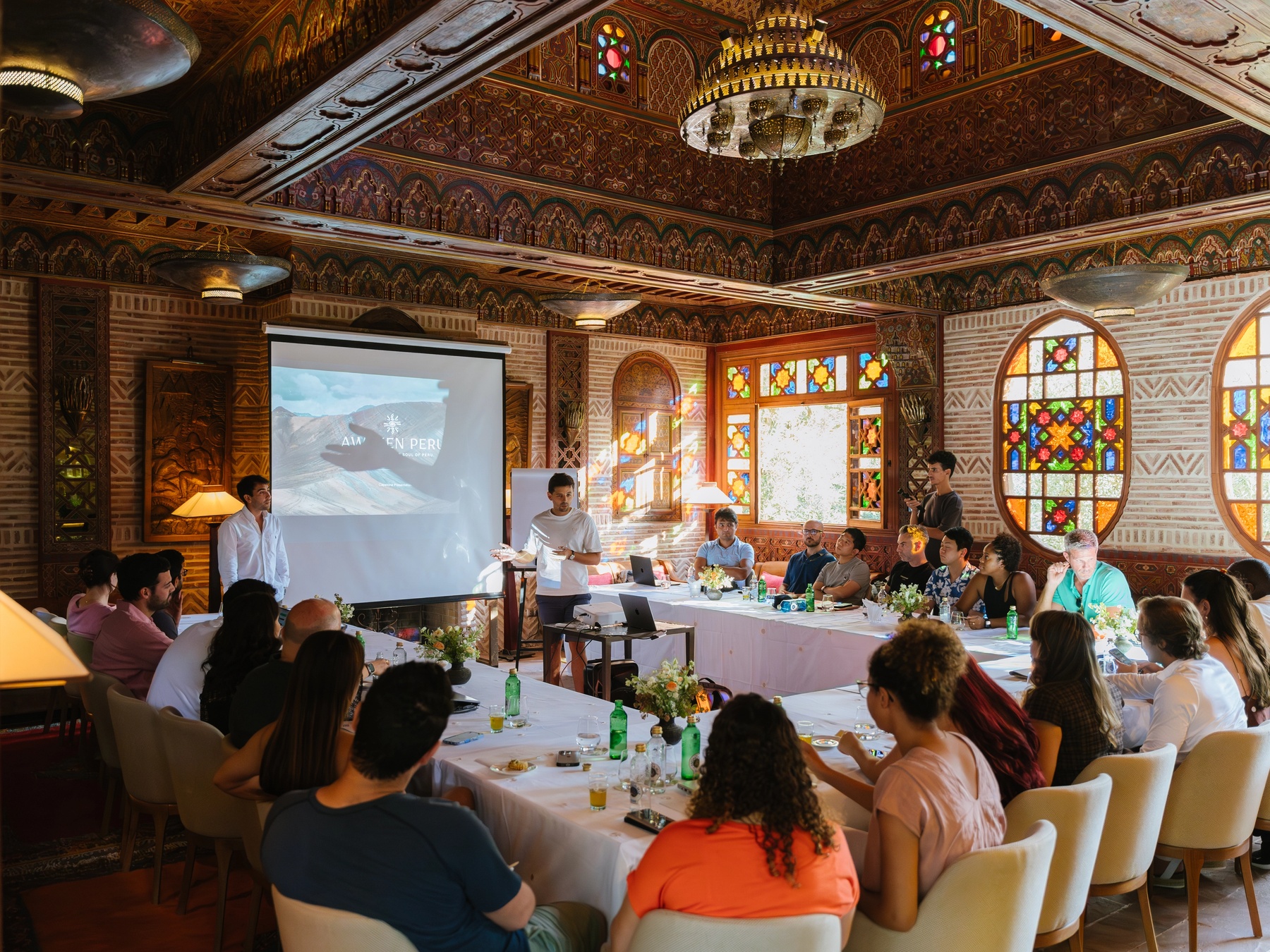
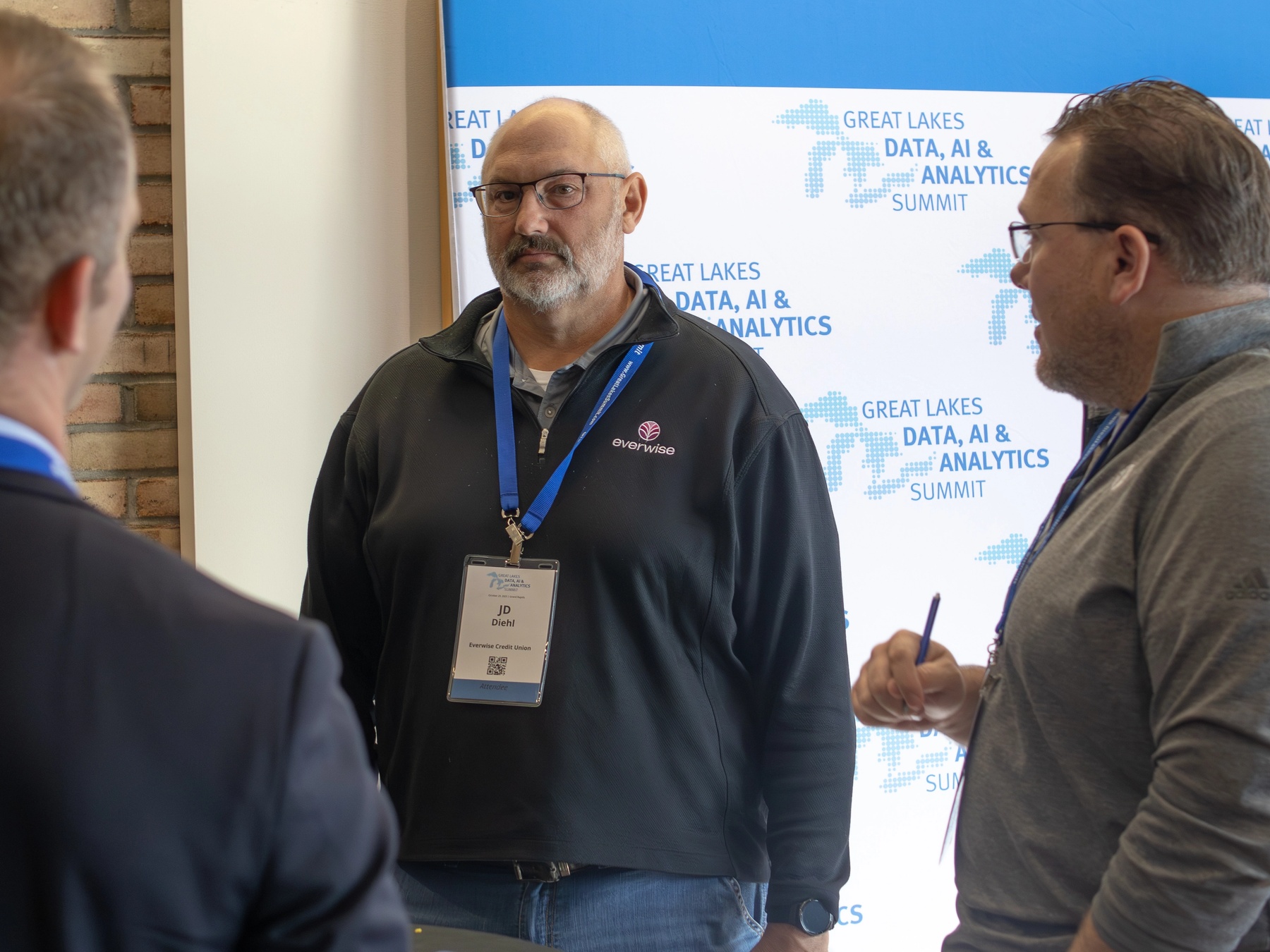
Our case on conference planning in Michigan shows what this looks like finished. For the leadership retreat part of the same problem, our HoldCo leadership retreat in Morocco's Atlas Mountains ran every session through the individual company leaders rather than the executive team, which sent that group home with 34 best practices and experiments ready to use.
To hand your finance team line items instead of a total, use the corporate offsite budget guide alongside what a corporate offsite actually costs. Then see the conference planning solution, or request a proposal.
Frequently asked questions
Who should pay for a portfolio company summit?
How do you split the cost of a summit across portfolio companies?
What should a portfolio company summit agenda include?
How far ahead do you need to plan a conference for 14 portfolio companies?