Japan is one of the best countries we know for a member or donor group. It's safe, the people are hospitable, the trains run on time, and the food is extraordinary. It will reward curiosity in a way way few places do.
But it's also where a badly paced and planned trip hurts a lot, because so many sights involve stairs, gravel, and standing.
So a member travel program to Japan starts with one question: how far can your slowest traveler walk in a day, comfortably, with a rest in the middle? Build every day a little under that number.
Below, we’ll cover: the month to choose and the two to avoid, the pace rule, the daily agenda we rely on, the eight questions to ask each of your travelers, and what goes wrong once you're on the ground.
Which month to go
Two good answers, and 8 weeks to avoid outright.
Late October into early December is our usual answer for a group like yours: mild weather, autumn color through November, and crowds far lighter than anything you'd run into in the spring.
Late May into early June is your second choice: everything's green, your prices are lower, and the rains usually hold off until mid-June.
Now the two to avoid. Cherry blossom season, late March into early April, is beautiful and worth seeing once in your life. And it's the worst possible week to move 24 people around a city, because your hotels cost double, the sites are full of tourists from the minute they open, and your group spends the week in queues instead of talking to each other.
Golden Week is the other: late April into the first week of May. The whole country travels at once, which fills trains and hotels months ahead of you.
How busy is Japan generally? Very. It took a record 3,908,900 foreign visitors in April 2025, up 28.5% year over year, with American visitors up 43% and more than 1,000,000 arriving from the US in the first four months alone.
Which is why you book 10 to 12 months out. Not six. At six months, you're choosing from what's left, because the small restaurants that only seat 20 at a time are long gone.
How far your slowest traveler can walk
Your Japan itinerary might look wonderful on paper: three temples in one morning, a garden after lunch, a market in the evening.
But when your travelers have walked 14,000 steps by three o'clock, most of it on stone and gravel, they will start quietly going back to the hotel. You'll lose the conversations you built the whole trip to create.
When we plan these kinds of trips, we set daily walking distance before planning anything else. Determine what your least mobile traveler can cover without it ruining their entire day. In reality, that’s typically one main site per morning, one per afternoon, and a bench or rest area in between.
The itinerary might feel thin while you're planning it, but it’ll work for your members.
The daily agenda that works
Here are the dayparts we use for a group of 10-20, most of them in their 60s and 70s. Yours will vary, but it should generally work:
- 7:30 to 9:00, breakfast, open seating, no fixed start. Older travelers wake early and want the choice.
- 9:30, depart. One site, private guide, no more than 90 minutes on foot.
- 12:00, lunch, seated, somewhere briefed on your dietary list in advance.
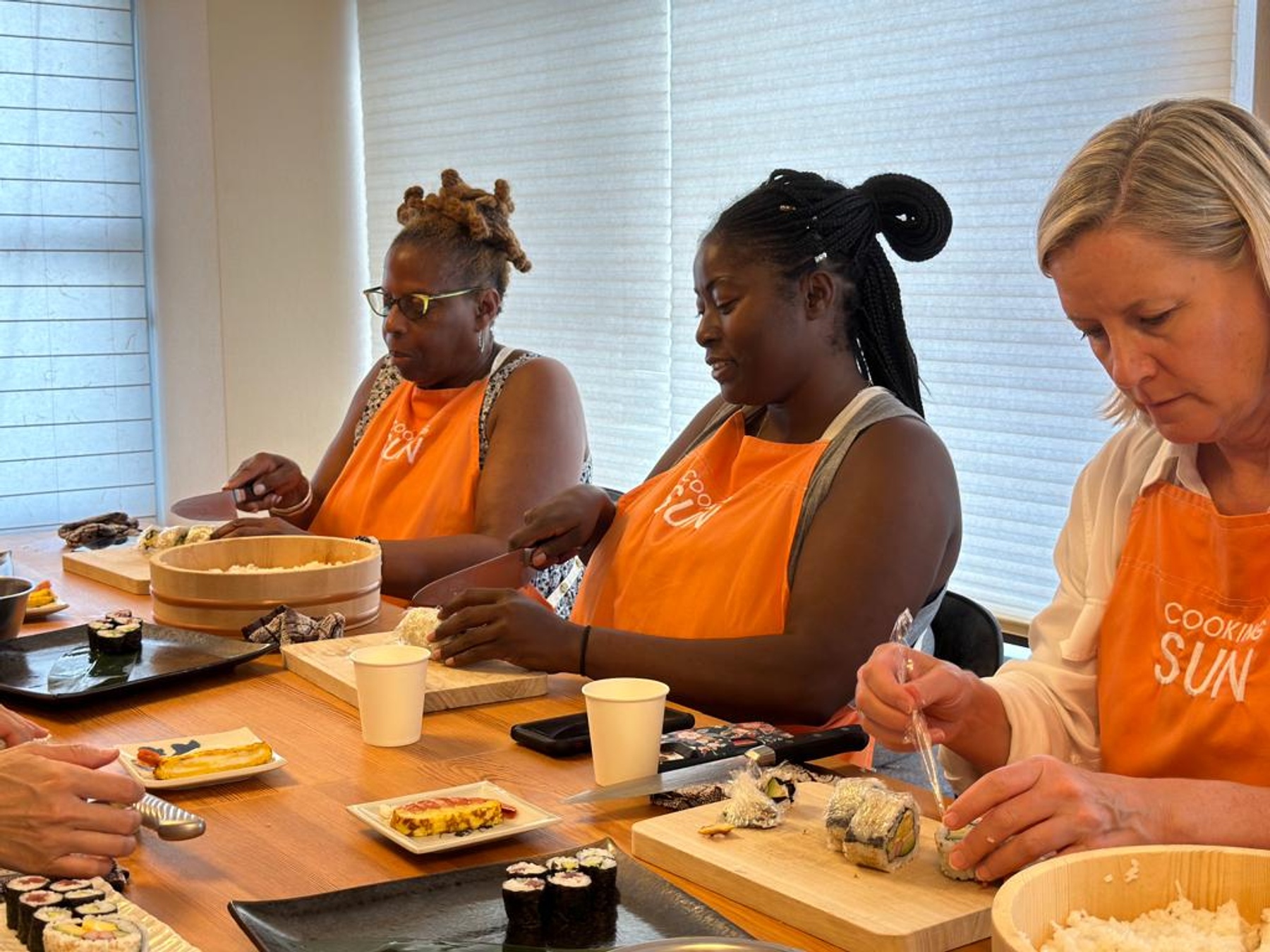
- 2:00 to 4:00, one activity. At least twice in the trip make it something they do with their hands: pottery, calligraphy, cooking, indigo dyeing.
- 4:00 onward, free. Every day. This isn't a gap in your program. It's the part that makes the rest survivable.
- 6:30 or 7:00, dinner. Together three nights out of six, optional on the others.
Use two bases, not four: Kyoto and Tokyo, or Kyoto and Kanazawa, with one bullet train between them. Each extra base costs you a packing morning, a transfer, and a hotel check-in line. None of that is what people sign up for.
The eight questions to ask each traveler
Ask these confidentially; send them 90 days out.
- How far can you walk comfortably in one go, and can you manage stairs without a handrail?
- Do you use any mobility aid, and would you use one on uneven ground?
- Can you sit on the floor for a meal, or do you need a chair?
- Any food you can't eat, and is that a preference or a medical matter?
- Any medication that needs refrigeration or a specific time of day?
- Who should we call in an emergency, and what is their contact info?
- Are you traveling with a partner, and is that person a member?
- Have you been to Japan before, and what would you want to do differently?
Question three is the one that catches people out. Why? Because many traditional Japanese restaurants and inns seat guests on the floor; a traveler who can't manage that will skip the meal rather than tell you, which means you've lost them from some of the best experiences on the trip.
Question four matters more in Japan than almost anywhere. Fish stock turns up in a great deal of food that otherwise seems vegetarian, so your vegetarian travelers need their meals arranged in advance: restaurant by restaurant, in writing, rather than negotiated at the table in a language they don't speak.
Four decisions that matter more than any upgrade
Which choices matter the most for a group this age?
- The first is luggage. Japan's overnight bag delivery between hotels is excellent, so use it every time you change base: your travelers carry a small bag onto the train and nothing else, which removes the single hardest moment of any Japan itinerary.
- The second is train seats. Bullet trains have reserved cars. Book 24 people separately and they end up scattered across four carriages with luggage stacked in the aisle, so reserve the whole group into one car.
- Third, book one night at a traditional inn rather than three. The shared bath and floor bedding are a highlight for many travelers but a genuine struggle for others. One night is memorable; three is an endurance test.
- Fourth, hire one guide per 10 people. At 20 with a single guide, half of them can't hear a word. Much of your group won’t hear the local historian you paid for the morning visit. A second guide resolves this.
What breaks on the ground
What goes wrong out there? Five things.
- Stairs at stations. Not every station has a lift where you need one. Check the route your group will actually walk rather than the one on the map.
- Restaurant sizes. Many of the best places seat 20 at most (and often fewer than that), so a group of 28 either splits up or eats at the hotel restaurant. Decide which in advance, not while searching for dinner.
- Cash. Card acceptance is still patchy at small temples, some taxis, and rural shops. Tell your travelers before they pack.
- Medication rules. Japan restricts some common medicines, which means checking months before departure rather than at customs.
- Illness. This one isn't avoidable. Somebody will likely get ill, so know which hospital you'd use and who speaks English there.
Who fixes it when things go wrong?
Japan is where a good planning partner earns their keep. It's also where it's easiest to believe you don't need one, because the country looks so orderly from outside.
How many moving parts does a group of 24 carry? Start with the bookings: 24 of them, from a dozen cities. Some need medication kept cold. Some can't do stairs. Several bring a partner.
And every inn, restaurant, guide, and transfer is its own agreement, often written in Japanese. Several want payment by bank transfer weeks before you land.
Then it's day five and three things go wrong at once: a train is canceled, one traveler has fallen on gravel outside a temple with no step-free exit, and tonight's restaurant has your booking down for 14 people rather than 24, which somebody has to fix in a language they can't read, from a metro platform, while your travelers wait to be told where they are going.
If that somebody is your development director, the relationships you flew 6,000 miles to build are forming without them.
Affinity Travel Co. is a single partner that plans and executes corporate offsites, executive retreats, and member travel for groups of 10 to 500, booking and managing every vendor from venue and air to private dining and ground transport. We've run 30+ programs across 28 countries for 900+ guests. We hold IATA accreditation 36567215, California Seller of Travel 2166658-50, and Florida Seller of Travel 46000.
Our member organization travel program to Japan is exactly this trip. See this write-up on member organization travel for how we work.
What the trip is for
Don't lose sight of the goal in the logistics. Your trip exists to do one thing: move people from supporters to insiders. That shift is measurable.
Overall donor retention sits at 26.3%, with new donor retention at 11% and repeat donor retention at 36.3%, measured across 4 million donors giving $5.3 billion at more than 15,000 nonprofits. And repeat donors account for more than 60% of total fundraising dollars.
Anything that turns a first-time supporter into a returning one is worth doing properly. A trip where a third of your group goes back to the hotel at three isn't doing that, however beautiful the temples were.
For designing and measuring the program itself, read our guide to building a member travel program that raises engagement, which covers the numbers to capture before departure, as well as the blueprint for custom alumni and donor travel. On why a generic itinerary underperforms for an institution like yours, check out our post on moving beyond cookie-cutter itineraries.
Or request a proposal and we'll build the itinerary around your specific travelers and their needs.
Frequently asked questions
What is the best month for a group trip to Japan?
How far ahead should we book a member travel program to Japan?
How many sites should a day include for older travelers?
How many guides does a group of 24 need in Japan?
What should we ask travelers before a Japan trip?