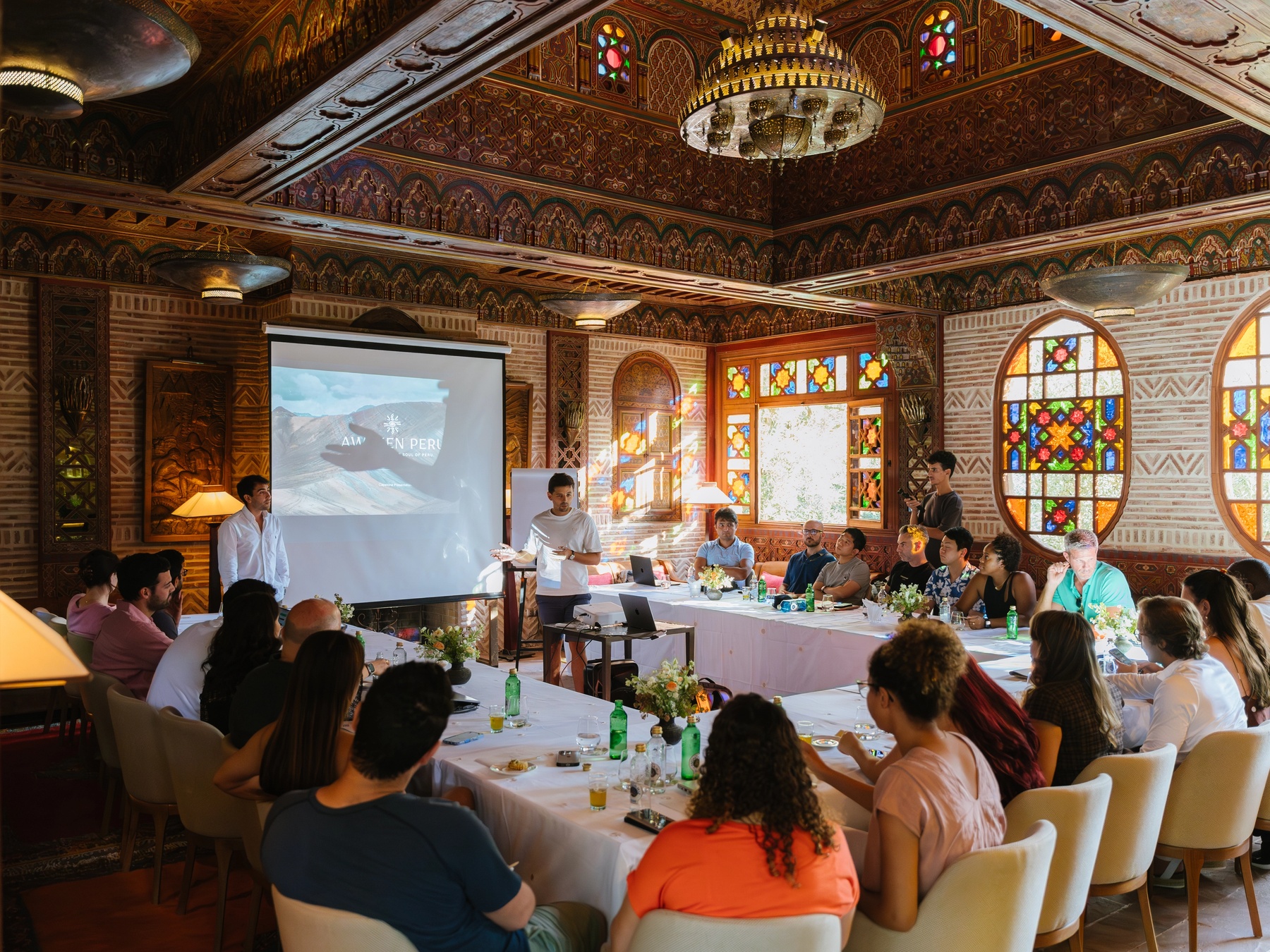
Your retreat for 14 executives isn't a smaller version of a 140 person offsite. It's a totally different job, so different things break.
At 140 people you're running logistics. At 14 you're handling 14 individual personalities. Each one has a view about seats. Each has an assistant guarding the calendar, other priorities, and something they'd rather not say in front of a colleague.
So your test for a fully managed executive retreat planning service isn't size. It's whether they can hold 14 sets of preferences without it causing conflict in the room.
Here's what to check, in the order you'll need it.
What does "fully managed" have to include?
The answer covers 10 items. Ask a prospective partner to confirm each one in writing:
- Venue sourcing and contracting, including villas and private properties, not just hotels.
- Air for every attendee, booked individually to their preference, with changes handled until everyone is home.
- Ground transport keyed to actual arrival times rather than one group bus.
- Preference collection, one to one and confidential.
- Facilitator sourcing, including three candidates with references you can call.
- Private dining, contracted directly, including a chef if needed.
- On-site staffing for the whole program, not a check-in visit.
- Materials, printed and shipped, because somebody always wants a notepad.
- A rain plan and a medical plan, written down, with local contacts named.
- Reconciliation of every invoice against every contract, shared with you.
Count how many a partner leaves with you. That number is your workload.
Why is a room of 14 harder than a room of 140?
Six things change at this size, none of them about logistics.
- Everyone is identifiable, so an anonymous survey isn't anonymous. Pre-work should be collected by somebody outside your company.
- Travel is individual: 14 people means 14 itineraries, most with particular airline loyalty, a seat preference, and an assistant who booked something before you asked.
- Partners sometimes come, which changes rooms, dinners, and how much of the day is really available to you.
- The facilitator matters a ton, because there's nowhere to hide. A weak one loses the respect and focus of execs in the first few minutes.
- The venue is more a house than a hotel. At this size a villa or small property often beats a resort, though it means different contracts, no room service, and a chef you hire separately.
- And nothing can go visibly wrong. At 140 people a hiccup is invisible. At 14, everyone sees every flaw, especially your chief executive.
That's why somebody has to be there, standing quietly at the back with a phone and a list, rather than an ops or HR manager in another time zone who has never seen the building.
Which questions should you ask a prospective planner?
Get the answers in writing:
- How do you collect individual preferences, and who sees them?
- Who from your team is on site, by name, and how many other programs are they running that month?
- Can you contract a private villa, or only hotels?
- Show me how you'd source a facilitator for a room where two people are in open conflict.
- What happens when a chief executive changes their return flight during the event?
- How are you paid, and which suppliers pay you?
- What's your plan if somebody needs a doctor in a remote location?
- Who verifies the final invoices against the contracts, and when do I see that?
How much does the facilitator matter?
Sometimes, more than the villa. At this size it's the biggest quality difference available. It's also the thing most often sourced in a last minute scramble.
Start 10 or more weeks out. Ask for three names. Speak to two references for each. Then give all three the same 30 minute interview, so you're comparing like with like.
What are you testing for? Not knowledge of your industry. You want somebody who can name the thing nobody is saying, in front of the person who doesn't want it said, without the room turning on them.
Hire from outside your company. Everyone inside it who could run that session reports to somebody sitting in the room, which is exactly why the honest conversation dries up immediately.
The executive retreat Affinity Travel Co. ran in Morocco's Atlas Mountains was built this way, with sessions led by the individual leaders rather than by the executive team. That group left with 34 best practices ready to use when they got home.
How does the fee structure work?
Three models. Ask which one you're being offered.
- A flat management fee is simplest: you see every supplier cost at what it cost. The fee is the fee.
- A share of program spend is common, which means your partner earns more when you spend more.
- Supplier commission means the hotel pays them, so it looks free while telling you whose side the negotiation is on.
Most partners we've come across use a mix of all three. Ask two things: which suppliers pay them, and whether those commissions come back to you.
On direction of travel, 71% of meeting professionals expect cost per attendee to rise, with cost now the top planning challenge at 38%, while hotel average daily rate rose 2.2% year over year in early 2026. Our post on what a corporate offsite actually costs breaks the equivalent number down line by line, and the corporate offsite budget guide shows what three different totals buy at a larger size.
One thing worth remembering while you compare fees. Your retreat for 14 costs less than an offsite for 140 and matters more, because the people in that room decide everything that happens to your company afterward. Gallup puts the gap between its most and least engaged teams at 23% in profitability and 43% in turnover, while manager engagement fell from 27% to 22% between 2024 and 2025, the sharpest one year drop on record. Your managers take their lead from the 14 people you're about to put in a villa for 3 days.
What to do this week
- Write down which of the 11 items above you want off your desk, because that list is your actual brief.
- Then ask each shortlisted partner the preference-collection question before anything else.
- Then start the facilitator search, 10 weeks out, with three names.
Affinity Travel Co. is a single partner that plans and executes corporate offsites, executive retreats, sales kickoffs, conferences, and incentive travel for groups of 10 to 500, booking and managing every vendor from venue and air to private dining and ground transport, with staff on site for the program. We collect preferences one to one. We contract villas as readily as hotels. Somebody from our team stays on site for the whole program. Before a final invoice reaches you, we've already verified it against its contract.
Affinity Travel Co. has run 30+ programs across 28 countries for 900 or more guests, including 9 Michelin-starred meals, and holds IATA accreditation 36567215, California Seller of Travel 2166658-50, and Florida Seller of Travel 46000.
For the design method behind the agenda itself, read our offsite planning framework. On what goes wrong, why corporate offsites fail. Or learn about the executive retreat solution and request a proposal.
Frequently asked questions
What should a fully managed executive retreat service include?
Is a small executive retreat easier to plan than a large offsite?
When should we hire the retreat facilitator?
How do executive retreat planning companies charge?